Tag Archives: Mil-Std 1399 AC-DC Power supply

Understanding Mil-Std 1399 Section 300 Part 1

MIL-STD-1399 Section 300 Part 1 — Summary and Acceptance Criteria

Established in 2018, MIL-STD-1399-300-1 establishes mandatory AC electrical interface requirements to ensure compatibility between user equipment and shipboard AC power systems. It defines the power characteristics, tolerances, and required compliance tests for equipment connected to Navy AC power systems.

The standard covers three system types:

  • Type I: 115/440 Vrms, 60 Hz (primary ship service distribution)
  • Type II: 115/440 Vrms, 400 Hz, ungrounded
  • Type III: 115/440 Vrms, 400 Hz, ungrounded, with tighter tolerances

It includes mandatory grounding, current waveform limits, surges, spikes, pulsed load behavior, and numerous susceptibility tests (voltage/frequency tolerance, spike, emergency conditions, AGD, insulation, etc.). Table I lists all required compliance tests.

This article provides an overview of the standard and makes references to sections and figures that are found within the document. You may download a copy of the standard  from the DLA quick-search site and download the standard from this page

If you are looking for MIL-STD-1399 compliant power supply, ETA-USA offers Type I, 60Hz compliant models available in 500~2400W on its Military and Aviation page. 


POWER SYSTEM TYPES AND CHARACTERISTICS

Type I — 60 Hz Power (Primary Shipboard AC Power)

Definition: 115 or 440 Vrms, 60 Hz; ungrounded or high-resistance grounded (440 V) or solid-grounded (115 V).

Applications: Standard ship service and lighting loads.

Type I System Characteristics (Table II Extracts)

  • Voltage tolerance: ±5% steady state (115 V or 440 V)
  • Frequency tolerance steady state: 60 Hz ± 2% (59–61.2 Hz)
  • Transient tolerances: defined envelopes (Figure 10) including excursions during faults and switching operations.
  • Harmonics:
    • THD ≤ 5%
    • Single harmonic ≤ 3%
    • Deviation factor ≤ 5% (3% for submarines)
  • Spike voltage: 900–1000 V peak (115 V systems) per Table V.
  • Emergency conditions:
    • Frequency excursion −100% to +12%
    • Voltage excursion −100% to +35%
    • Duration up to 2 minutes depending on case

Type II — 400 Hz Ungrounded

  • Limited-use system with wider tolerances than Type III.
  • Behavior of power decay is fast due to M/G set protective trip actions (interruptions occur within ms).

Type III — 400 Hz Ungrounded (Tighter Tolerances)

  • Used where precision 400 Hz is needed (avionics).
  • Tighter steady-state and transient tolerances than Type II.
  • Delivered typically as 115/200 V 400 Hz grounded-wye for aircraft servicing.

USER EQUIPMENT REQUIREMENTS (APPLICABLE TO ALL TYPES)

All equipment must comply with section 5.2. requirements, enforced through tests in Section 5.3.

Major required attributes:

Voltage & Frequency Compatibility

Equipment must tolerate all defined Type-specific envelopes (steady-state, transient, emergencies).

Current Harmonic Limits (Very Important for Power Supplies)

For 60 Hz equipment ≥1 kVA (your 1000 W AC/DC supply qualifies):

  • From 60 Hz–2 kHz: ≤3% of fundamental current
  • From 2 kHz–20 kHz: ≤(6000 / f)%
    (Figure 22)

For <1 kVA equipment: similar but slightly more lenient (Figure 23).

Power Factor Requirement

  • PF must meet criteria of 5.2.7.
  • Corrective action may be required for poor PF loads.

Inrush / Surge Current

The ratio of surge to rated current is limited by a curve (Figure 26).
Measured at specific AC zero-crossings.

Pulsed Load Requirements

Applicable to loads that switch or step power.

  • Must meet time-domain and frequency-domain limits.
  • TSD calculations must follow Appendix A.

Grounding and Leakage Current Limits

Includes:

  • Insulation resistance tests
  • Active ground detection (AGD) support
  • Simulated human-body ground-current tests (Figures 33–37)

Voltage Spike Survival

Equipment must survive spike tests:

  • 900–1000 V peak for 115 V systems
  • Sync angles: 0°, 90°, 180°, 270° on all conductors

REQUIRED COMPLIANCE TESTS

Table I lists all required tests by requirement category.
Major tests include:

  • Grounding test (5.3.1)
  • Power profile verification (phases, voltage, PF, current) (5.3.2)
  • Voltage & frequency tolerance test (5.3.3)
  • Transient tolerance test (5.3.4)
  • Voltage spike test (5.3.5)
  • Emergency conditions test (4 subtests: tr, ts, decay, excursion) (5.3.6)
  • Current waveform (harmonics) test (5.2.10 / 5.3.7)
  • Modulation susceptibility test (5.3.8)
  • Human-body leakage current tests (5.3.9)
  • Line-to-ground withstand & AGD tests (5.3.10)

115 VAC, 60 Hz, SINGLE-PHASE (TYPE I) IN DETAIL

The criteria for a single phase, 115Vac nominal AC/DC power supply described below outlines the acceptable criteria for a

Applicable System Characteristics (Table II for Type I)

For 115 Vrms 60 Hz Type I power, your supply must:

Voltage Characteristics

  • Nominal: 115 Vrms
  • Steady-state tolerance: ±5%
  • Transient tolerance envelope defined in Figure 10 (frequency & voltage).
  • Emergency voltage excursions: −100% to +35% for up to 2 minutes.

Frequency Characteristics

  • Nominal: 60 Hz
  • Steady-state tolerance: ±2% (58.8–61.2 Hz)
  • Transient: tight envelope defined in Figure 10.

Harmonics and Waveform

  • THD ≤ 5%
  • Individual harmonic ≤ 3%
  • Deviation factor ≤ 5%

Required Equipment Performance Requirements

Harmonic Current Limits (≥1 kVA Applies to Your 1000 W Converter)

Per 5.2.10 and Figure 22:

  • ≤3% of fundamental (60–2,000 Hz)
  • ≤6000/f % (2 kHz–20 kHz)

Inrush Current Limits

Must satisfy the surge/inrush envelope of Figure 26.

Voltage Spike Survival

Equipment must withstand:

  • 900–1000 V peak spikes on all conductors
  • At 0°, 90°, 180°, 270°

Emergency Condition Survival

Equipment must endure:

  1. tr limited-break interruption (~70 ms if unknown)
  2. ts emergency source transfer interruption
  3. Power decay behavior (loss of prime mover)
  4. Positive voltage excursion

Ground Detection Requirements

If installed on ships using AGD:

  • Must pass AGD susceptibility test (DC source applied through RAGD = 50 kΩ).
  • Single-phase AGD test circuit shown in Figure 39.

Insulation Resistance

Verified via megohmmeter per 5.3.10.1.


Acceptance Criteria Summary (What Your 115 V 60 Hz Power Supply Must Pass)

Your AC/DC power supply must pass all of the following to be MIL-STD-1399-300-1 compliant:

Electrical Compatibility

  • Operates over full voltage & frequency tolerance and transient envelopes
  • Survives all emergency condition subtests (tr, ts, decay, excursion)

Waveform Quality

  • Input current harmonics within Figure 22 limits
  • PF meets 5.2.7

Safety / Grounding

  • Leakage current within limits of 5.2.5 (human-body impedance tests)
  • AGD and L-G withstand tests passed

Transient Robustness

  • Survive specified voltage spikes (900–1000 V peak)

Operational Behavior

  • Inrush current within Figure 26 limits
  • Pulsed/ramped load limits if applicable
  • No excessive line-to-ground capacitance or current (5.2.4)

Additional Compliances 

In addition to the requirements outlined in 1399, the qualifying power supply must meet applicable sections of MIL-STD 461 (version dictated by the government procurement office, but the most current version is 461G). At the very least, expect conducted emissions CE101 & CE102; radiated emissions RE101 & RE102; conducted susceptibility  CS101, CS114, CS115. The supply may also need to perform with the limits of radiated susceptibility of RS101 and RS103. 


Mil-Std 1399 Power supplies For Purchase

ETA-USA offers military grade power supplies with customizable options that meet Mil-std 1399 Sec 300 Part 1 60Hz single phase requirement.  Contact an ETA-USA representative for price, lead-time, and CADS.  All ETA-USA power supplies ate TAA compliant and Mil-grade products are made in the USA.
Customizable AC/DC Mil-grade Power Supplies

CH-M500    DATASHEET

CH-M1000  DATASHEET

CH-M2000  DATASHEET

Mil-S-901 Compliant IP66 Rated AC/DC Power Supplies

LPM500  DATASHEET

LPM650  DATASHEET

LPM1100  DATASHEET

MIL-STD-1399 Explained: Power Interface Standards for Naval Systems

MIL-STD-1399 Explained: Power Interface Standards for Naval Systems

When designing electronic equipment for naval ships, it’s not enough to just survive harsh sea conditions. Your system also needs to integrate seamlessly with the ship’s power infrastructure—and that’s where MIL-STD-1399 comes in.

This critical military standard ensures that all electronic equipment on board a ship can communicate, function, and interoperate reliably with shipboard power and signal interfaces.

In this post, we’ll explain what MIL-STD-1399 is, why it’s important, and what engineers need to know when designing equipment for naval vessels.

If you are looking for Mil-Std 1399 compliant AC/DC power supply,  ETA-USA’s Military Grade Power Supplies all comply with Type I single phase 60Hz  systems.

For information on the most up to date requirements of 1399, see our blog page on MIL-STD 1399 Sec 300 Part 1 


 What Is MIL-STD-1399?

MIL-STD-1399 is a United States military standard that defines interface requirements for shipboard systems, particularly focusing on electrical power interfaces between the ship’s power distribution system and installed equipment.

It provides common interface definitions to ensure compatibility between:

  • Ship power supplies (AC/DC, frequency, voltage, etc.)

  • Electronic and electromechanical equipment installed on board

The standard is used widely in U.S. Navy and allied naval programs.


 What Does MIL-STD-1399 Cover?

MIL-STD-1399 is broken into several sections, each addressing a specific type of interface or system behavior. These sections are often treated as standalone documents depending on the application.

 Key Sections Include:

Section Title What It Covers
300A Electric Power, AC 440V/60Hz and 115V/60Hz shipboard AC power
300B Electric Power, DC DC power interfaces (commonly 24V or 28V)
070 Noise Limits, Interface and Control Limits on conducted/radiated noise and transients
480 Synchro Systems Electrical interface for synchro transmitters
470 Shipboard Grounding & Bonding Safety and EMI mitigation grounding standards
302 Power Conditioning Requirements For sensitive or mission-critical electronics

The most widely used section is MIL-STD-1399 Section 300 (AC and DC power), which standardizes voltage levels, frequency tolerances, power factor expectations, harmonic content, and electrical noise limits for shipboard power systems.


 MIL-STD-1399 Section 300A (AC Power) – Key Highlights

This section defines how shipboard equipment should behave on 60 Hz AC power, including:

  • Voltage ranges:

    • 440V 3-phase

    • 115V single-phase or line-to-neutral

  • Frequency:

    • Nominal 60 Hz, with allowable variations

  • Power factor:

    • Minimum 0.8 lagging

  • Voltage imbalance:

    • Max 3% phase-to-phase variation

  • Harmonic distortion:

    • Limits on total harmonic distortion (THD)

  • Transient tolerance:

    • Ride-through or reset behavior during surges and sags

Why it matters: If your system can’t tolerate the ship’s power quality, it could shut down, overheat, or interfere with other equipment—potentially jeopardizing mission readiness.

ETA-USA’s CH-M500CH-M1000 , and CH-M2000 series meets 115Vac 60Hz power profiles and used mil-approved D38999 connectors as standard.


MIL-STD-1399 Section 300B (DC Power) – Key Highlights

Section 300B covers DC-powered systems, typically using:

  • 24 VDC

  • 28 VDC

It specifies:

  • Voltage regulation tolerances

  • Ripple voltage limits

  • Load step response

  • Noise immunity and conducted emissions

This section is especially relevant for:

  • Fire control systems

  • Lighting and emergency gear

  • Communication equipment


 Who Needs to Comply?

MIL-STD-1399 applies to:

  • OEMs building systems for naval platforms

  • System integrators developing shipboard electronics

  • Defense contractors working with the U.S. Navy or allies

Any electronic system that plugs into ship power must be tested for compatibility, stability, and survivability under MIL-STD-1399 specifications.


 How Compliance Is Verified

While MIL-STD-1399 itself doesn’t prescribe test procedures, compliance is typically verified through:

  • Interface Control Documents (ICDs)

  • Power conditioning analysis

  • Bench testing using MIL-STD power simulators

  • Lab or on-board trials under nominal and off-nominal conditions

EMC compliance testing is often done in parallel using MIL-STD-461.


 Design Considerations for MIL-STD-1399

If you’re developing shipboard equipment, here’s what you should do early:

  •  Design for wide AC voltage and frequency tolerance

  •  Include EMI filters to reduce conducted emissions

  •  Provide hold-up time for power sags

  •  Confirm grounding schemes meet ship standards

  •  Test with power simulation equipment mimicking naval power profiles

 Pro tip: MIL-STD-1399 is not just a design goal—it’s a system integration requirement. Even if your product is COTS (commercial off the shelf), it must be qualified for shipboard use.


MIL-STD-1399 ensures that shipboard systems don’t just function—they integrate. It prevents power issues, communication errors, and costly retrofits by defining clear electrical expectations upfront.

For naval electronics, it’s not enough to be rugged and high-tech. You also need to be electrically compatible with the rest of the ship. MIL-STD-1399 bridges that gap between smart technology and real-world integration. Here are some of ETA-USA’s products designed to meet MIL-STD-1399 :

CH-M500 Series

CH-M1000 Series

CH-M2000 Series

Are these what you’re looking for? ETA-USA can also design power supplies to meet your requirements. Please do not hesitate to contact us.

Customizing Your Power Solutions with ETA-USA

Endless Custom Power Supply Options

Thirty years of industry experience , ETA-USA has seen a plethora of unique requirements that is has engineered and can build upon to provide its customers solutions as specialized as their applications.

All of of products are TAA compliant. Rackmount, Military, Avionics, and IP65+ Rated products are made in the USA. CAD and STEP models available upon request.

Contact an ETA-USA Representative for Details

Customized AC/DC External Adapters, TAA Compliant.

External Adapters
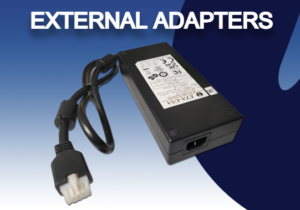
Customizable AC/DC External Adapters

ETA-USA’s ITE and medical grade external power adapters can be customized to power your application requirements with low minimum order quantities and 1-2 piece evaluation units available to purchase.

  • 25W~400W ITE and Medical Grade Products
  • Single and Multiple Outputs
  • Customizable AC Inlets (select Models) DC out connector and Cables.
  • DOE VI and DOE VI Compliance
  • TAA Compliant
  • IP42
  • Customer Name and Part Number Can Be Added at no Additional Charge
  • UL, UK, CE, & TUV Safety Certified
  • US, UK, EU, & JP AC Cords Can be Ordered & Packaged with Product


Rackmount AC/DC & DC/DC Power Systems Made in the USA

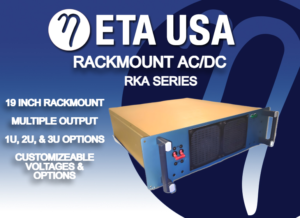
AC/DC Custom Rackmount Power System

ETA-USA designed and built its first Rackmount for Alstom MUX Train Control system in 1998, which have been in use and operating for over 25 years without requiring service. ETA-USA can quickly deliver a robust and reliable rackmount power systems in as little as 8 weeks after order.

  • 19 Inch Rackmount Units at 1U, 2U, 3U, and 4U sizes
  • Up to 8 Separate & Isolated Outputs or 4 Outputs with Redundancy
  • LED Display with Voltage & Current Reading
  • Alarm Signals & Power Good Indicator
  • I2C Reporting Options Available
  • Industrial & Military Grade Options Available
  • DC/DC Models Available

Military & Defense

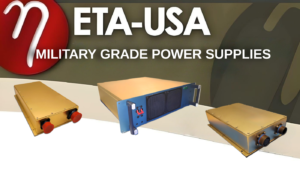
Mil-Grade AC/DC & DC/DC

ETA-USA is ITAR registered and all of its Mil-grade and Defense compliant power supplies are designed and built in the USA. ETA-USA maintains an NIST SP800 compliant

  • Conduction Cooled Single Output AC/DC Power Supplies form 500~2,000W, 50/60/400Hz Input Frequency
  • Convection Cooled Single and Multiple Output AC/DC Power Systems up to 6,000W
  • Single and 3 Phase Options
  • Convection and Conduction Cooled DC/DC Models, Meets Mil-Std 1279
  • Mil-Std 461. 810, & 1399 compliant. Mil-Std 910 enclosure Designs Available.
  • User Selectable D38999 or 5015 Connectors available.
  • Multiple, Isolated Output Voltages Available.
  • Anodized, Chromate, or Powder Coat finishes
  • Low MOQ
  • High Altitude Models Coming Soon

Semi-Custom Outdoor and Ingress Protection

IP65 for Explosive Environments

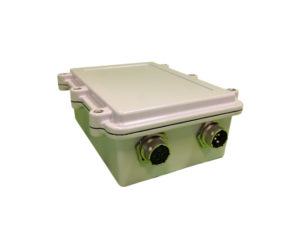
ETA-USA can package its designs into an IP65+ Rated enclosure to be used in rugged and outdoor environments.

  • Selection of Proven designs for AC/DC & DC/DC requirements form 300~1,400W
  • Heatsink Design Capability for High Wattage, Environmentally Sealed
  • IECeX for Explosive Environment Model Line Available
  • View Semi-Custom Page for Baseline Models

Custom Design Capabilities

  • Rapid Design to Prototype Cycle
  • Non-Standard Input & Output Voltages, Isolation Voltages
  • Low and High Volume manufacturing
  • CAD models available
  • EMI & Temperature Testing
  • Engineering experience to meet Commercial, Industrial,  Military, and Aviation standards
  • ISO 9001 2015 Certified, AS9100 Compliant
  • Engineering and Technical Support to Obtain 3rd Party Certification

Ruggedized, Ingress Protected AC/DC Power Supply

Semi-Custom Ruggedized AC/DC Power Supplies for Harsh and Explosive Environments

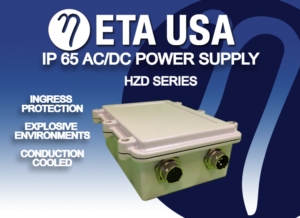
The increasing use of electronics for use in harsh and extreme environments require power solutions protects itself from harsh external conditions while providing reliable, continuous power.  ETA-USA line of customizable ruggedized AC/DC conduction cooled power supplies with a base IP 65 design that can be fortified to meet IP67 and conformal coated. 

These models can be purchased with an ETA-USA recommended heatsink that can be customized for application mounting requirements, or a stand alone model can be purchased with instructions on the ideal thermal design. 

Contact an ETA-USA Representative for ordering information, pricing, lead times, and CAD models. Products can be built in as little as 5 weeks


HZD500 Series- 500W IP66 Rated Power Supply Designed for Explosive Environments 

Click on Image for Datasheet
  • Universal input: 90~264 VAC in; 50/60Hz
  • Output voltages: 12, 24, 28, 48 (fixed)
  • IP67 rated enclosure. IP66 rated for Hazardous Environments 
  • Meets IEC 60079-0 2017: General & IEC 60079-7: 2015 safety “E” (with connector housing)
  • IP64 version with Power On LED and output-off signal available 
  • Pole Mount Heatsink available for high temp environments
  • Optional Mil-Std 461 CE 101, 102 Compliant model avilable

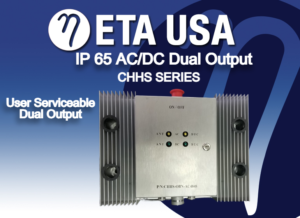
CHHS Series- 1400W IP67 Dual Output Power Supply-User Serviceable 

Click Image for Datasheet
  • Universal input: 90~264 VAC in; 50/60Hz
  • Two isolated 700W floating outputs
  • Output Voltages: 12, 24, 28, 48 (fixed)
  • IP67 rated enclosure with Optional Heatsink for High Temperature Environments 
  • Power On and Output Good LED
  • Emergency Shut Off switch 
  • User serviceable interface with cord grips for customer wiring

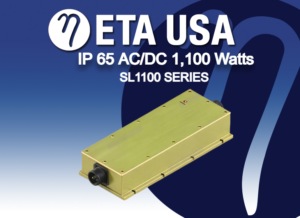
SL1100 Series- 1,100W IP65 Slim Form Factor 

Click Image for Datasheet
  • Universal input: 90~264 VAC in; 50/60/400Hz
  • Output voltages: 12, 24, 28, 48 (Non Standard Voltages 9V~56 available upon request)
  • Output Power On LED
  • SAE 5015 I-O or Permanent Wired Interface options
  • Operating Temperature (Ambient): -40°C~80°C 
  • Additional Options: Remote On/Off, external voltage trim (10%, 20%), Vout, Iout, and internal temperature reporting (I2C protocol), Anodized Enclosure
  • Can be ordered to meet Mil-Std 461 EMI (CE101, CE102, RE102, RE103) & Mil Std 1399
  • RoHS and Non-RoHS versions available

ETA-USA has over 30 years of industry experience providing custom power supply solutions to its customers. Additional custom requirements are welcomed.