MIL-STD-810: The Gold Standard for Rugged Equipment Testing
When designing equipment destined for military or harsh environments, one question always comes up: “How do I ensure my product will survive tough conditions?”
Enter MIL-STD-810 — the U.S. military’s cornerstone standard for environmental testing of equipment. If you want your product to be rugged, reliable, and ready for real-world use — this standard is your go-to guide.
In this post, we’ll explore what MIL-STD-810 is, why it matters, and how you can leverage it to build tougher products.
What is MIL-STD-810?
MIL-STD-810 ( Military Standard 810) is a test method standard developed by the U.S. Department of Defense. It outlines how to simulate environmental stresses that equipment might face in actual use — like temperature extremes, shock, vibration, dust, humidity, and more.
Instead of just guessing how a device will perform, MIL-STD-810 gives you a scientific, repeatable way to test durability.
Why MIL-STD-810 Matters
-
Real-World Relevance: The standard focuses on conditions soldiers and equipment actually face — desert heat, arctic cold, tropical humidity, rough transportation, and battlefield shock.
-
Product Confidence: Passing MIL-STD-810 tests means your device is tough enough for harsh conditions, which reassures users and buyers.
-
Market Access: Many government and defense contracts require MIL-STD-810 compliance or testing.
-
Rugged Brand Image: It’s a great marketing point for “ruggedized” consumer and industrial products too.
Key Test Categories in MIL-STD-810
MIL-STD-810 includes over 20 test methods, but some of the most common are:
1. Temperature Testing (High and Low)
2. Humidity
3. Vibration
-
Simulates vibrations from vehicles, aircraft, or rough handling during transport
-
Random and sinusoidal vibration profiles
4. Shock and Drop
5. Dust and Sand
6. Rain and Water Spray
7. Altitude
How Does MIL-STD-810 Testing Work?
1. Tailoring
-
MIL-STD-810 is not “one size fits all.”
-
You tailor the test plan based on the equipment’s expected environment — for example, if your device is for naval use, you might focus more on salt fog and humidity tests.
2. Test Setup
-
Testing is performed using specialized chambers and equipment replicating the conditions (e.g., environmental chambers, vibration tables, shock machines).
3. Pass/Fail Criteria
Common Myths About MIL-STD-810
Myth 1: It’s a checklist of tests you must pass.
Truth: MIL-STD-810 is a guide. You select and tailor the tests based on your product’s mission profile.
Myth 2: Passing MIL-STD-810 means your product is indestructible.
Truth: It means your product meets specific environmental criteria — not that it can survive every possible scenario.
Practical Tips for Using MIL-STD-810
-
Understand Your Environment: Talk to users and study the deployment scenario before picking tests.
-
Start Early: Incorporate ruggedness into design before testing. Testing late can be costly.
-
Document Everything: Test setups, procedures, and results should be well documented for certification and troubleshooting.
-
Work with Experienced Labs: Accredited test labs can guide you through test tailoring and execution.
The MIL-STD-810H standard outlines environmental test methods for military equipment—including power supplies—to ensure their reliability and durability under harsh operating conditions. While MIL-STD-810 doesn’t contain “pass/fail” criteria by itself, it provides test procedures that manufacturers must perform to simulate real-world environments.
Below is a breakdown of MIL-STD-810H methods that commonly apply to power supplies, along with what they test and typical criteria:
Relevant MIL-STD-810H Methods for Power Supplies
| Method |
Test Name |
Purpose for Power Supplies |
| 500.6 |
Low Pressure (Altitude) |
Ensures performance at high altitudes; tests for arcing and insulation breakdown. |
| 501.7 |
High Temperature |
Tests operation and storage at elevated temperatures. |
| 502.7 |
Low Temperature |
Verifies function in cold environments (down to -51 °C for storage). |
| 503.7 |
Temperature Shock |
Ensures survival during sudden changes in temperature (e.g., −40 °C to +70 °C in <1 min). |
| 505.7 |
Solar Radiation (Sunshine) |
For exposed systems—tests UV aging, heating, and material degradation. |
| 506.7 |
Rain / Blowing Rain |
For waterproof enclosures—tests ingress protection. Often paired with IP ratings. |
| 507.7 |
Humidity |
Tests for condensation, corrosion, and insulation failure in humid environments. |
| 508.8 |
Fungus |
For organic insulation or coatings—ensures materials don’t degrade when exposed to biological growth. |
| 509.7 |
Salt Fog |
Simulates marine environments—important for corrosion resistance of PCB and connectors. |
| 510.7 |
Sand and Dust |
Ensures enclosures are sealed against particulate intrusion. |
| 514.8 |
Vibration |
Simulates vibration from transport, launch, or shipboard operations (e.g., helicopters or submarines). |
| 516.8 |
Shock |
Drop and mechanical shock resistance—tests unit survivability. |
| 521.4 |
Icing/Freezing Rain |
Tests surface and mechanical function after ice accumulation. |
| 528.1 |
Mechanical Vibrations of Shipboard Equipment (Type I) |
Simulates shipboard vibration patterns—particularly relevant to submarines and naval systems. |
Criteria and How They Apply to Power Supplies
MIL-STD-810 does not prescribe fixed pass/fail limits. Instead:
Example: For Method 501.7 (High Temp)
-
Operating temp range may be defined as: 0 °C to 70 °C
-
Storage temp range may be −40 °C to 85 °C
-
You must demonstrate the PSU functions normally during and after exposure within those parameters.
Example: A Power Supply for Naval/Submarine Use
Let’s say you’re qualifying a rugged DC-DC power supply for a submarine:
| Test |
Application |
Typical Limits |
| 509.7 (Salt Fog) |
Prevents corrosion of terminals & PCBs |
5% salt solution for 48 hours |
| 507.7 (Humidity) |
Tropical/humid deployments |
95% RH, 30–60 °C for 10 days |
| 516.8 (Shock) |
Resists dropping or explosion shock |
40g for 11 ms |
| 514.8 (Vibration) |
Shipboard vibration (per MIL-STD-167) |
Profile depends on mounting type |
Summary: Design Considerations for Compliance
To pass MIL-STD-810H tests, your power supply must include:
-
Robust mechanical design: shock-absorbing mounts, ruggedized enclosures
-
Thermal management: heatsinks, thermal pads, proper derating
-
Conformal coating or potting: for humidity, fungus, and salt fog resistance
-
Connector and housing sealing: dustproof, waterproof designs (often IP65+)
-
Low EMI emissions and high immunity: Often paired with MIL-STD-461G
Common Environmental Parameters for MIL-STD-810 Power Supplies
| Category |
Typical Design Parameters |
Relevant Test Methods |
| Operating Temperature |
–40 °C to +70 °C (sometimes –55 °C to +85 °C) |
501.7 (High Temp), 502.7 (Low Temp) |
| Storage Temperature |
–55 °C to +85 °C |
501.7, 502.7 |
| Altitude / Pressure |
Up to 15,000–40,000 ft (depending on use) |
500.6 (Low Pressure) |
| Humidity |
95% RH, cycling 30–60 °C for 10–14 days |
507.7 |
| Salt Fog |
5% NaCl solution, 48–96 hours |
509.7 |
| Fungus Resistance |
28-day exposure, ASTM G21 compliant |
508.8 |
| Thermal Shock |
–40 °C to +70 °C, 5–10 cycles |
503.7 |
| Solar Radiation (if exposed) |
24h/day cycles for 10 days, UV spectrum |
505.7 |
Mechanical Stress Parameters
| Stress Type |
Common Test Limits |
Method |
| Vibration (Random / Shipboard) |
1.0–7.7 Grms, 5–500 Hz, 1 hr/axis (X, Y, Z) |
514.8 (Category 4, 20, 24) |
| Mechanical Shock |
20–40 g, 11–18 ms, half-sine, 3 axes |
516.8 |
| Drop Shock |
1-meter drop, unpowered |
516.8 (Proc IV) |
| Shipboard Vibration |
5–33 Hz sinusoidal, 1 hr/axis |
528.1 |
| Ingress Protection |
IP65 to IP67 (for outdoor/submarine enclosures) |
Supplementary |
Materials and Construction Expectations
| Parameter |
Typical Requirement |
| Coating (PCB) |
Conformal coating (MIL-I-46058C or IPC-CC-830) |
| Sealing |
Waterproof gaskets, epoxy, or potted enclosures |
| Corrosion Resistance |
Anodized, stainless, or marine-grade coatings |
| Connectors |
MIL-grade circular or shielded connectors |
| Shock Mounting |
Rubberized isolation for PCB or chassis |
Electrical Performance Under Environmental Stress
| Test |
Typical Requirement |
| Voltage Regulation |
±1–5% across temp and load |
| Output Ripple |
<100 mV (varies with application) |
| Efficiency |
80% or higher (often 85–90%) |
| Hold-Up Time |
10–20 ms minimum |
| EMC Compliance |
MIL-STD-461G (often required jointly) |
| Thermal Protection |
Internal shutdown above 85–95 °C |
| Overvoltage / Short Circuit |
Self-recovery or fail-safe modes |
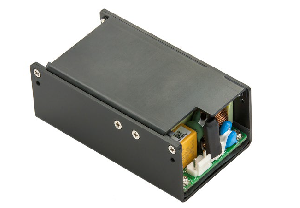
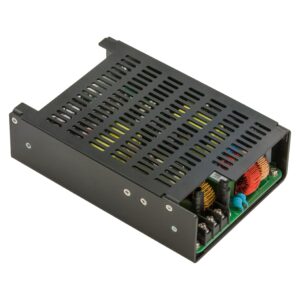
ETA-USA Mil-Std compliant power supplies are designed to meet the non-operational storage temperature and vibration/shock specifications for transportation. All units are conformally coated to mitigate salt fog exposure and humidity requirements during operation. For specific environmental conditions, contact an ETA-USA representative, our technical team respond in less than 24 hours for all technical questions.
US Government and Defense industry customers are recommended to view our capability statement