Tag Archives: AC/DC

CUSTOMIZABLE ITE EXTERNAL DESKTOP POWER ADAPTERS

ITE Desktop Power Supply with Customizable to Fast Regulatory Approval

Powering a new product design can invites additional complexity for designers bringing a new product to market. Designing for safety, emissions, and regulatory standards alone can stop a project from obtaining that critical regulatory approval, piling on additional testing and engineering costs.  In addition, the final product will dictate the power demand, so it makes no sense for new product to be designed with a power converter in mind. 

Let ETA-USA’s external, desktop style power supplies deliver the DC voltage you need in a pre-approved device and  save time and effort of designing the power conversion in your system. ETA-USA desktop adapters hold UL, TUV, and UKCA 62368-1 safety certifications and meet FCC conducted and radiated emissions standards.  

Most important, ETA-USA custom DC connector program allows you to pick the DC interface of your choice. Choose from our pre-approved connector list or contact a technical representative with connector you want to use and the power requirement you need. Our staff are trained to ensure the connector will meet regulatory safety compliance and can recommend substitutes if needed. Best of all, ETA-USA has a low minimum order quantity for custom connector options (30 pcs) and customers can procure 1-2 evaluation units to test before they commit to a final design.  

See some of our  popular desktop ITE adapter models below, and contact an ETA-USA representative . All models are RoHS/REACH and DOE VI compliant.

All ETA-USA products are TAA compliant. 

Standard models can be purchased from an Authorized ETA-USA Distributor. Customized options can be ordered from an ETA-USA sales representative.

65W ITE Desktop Adapter- DTL65 Series

DTL65-SX-W6

  • Universal Input: AC 100~240V 50/60 Hz
  • IEC320-C14 AC inlet  (3 prong)
  • No load power consumption <210mW
  • Available Voltages: 5, 12, 15, 19, 24, 36, 48
  • Short circuit, OVP, OCP protection
  • Operating Temp: 0°C~60°C
  • UL/TUV/EN 62362-1 Safety, FCC 15 Class B
  • Customized cable and DC connector available

DTL65-SX-WL6

  • Universal Input: AC 100~240V 50/60 Hz
  •  3-pole IEC320-C6 and 2-pole C8 AC inlet available
  • No load power consumption <150mW
  • Meets LPS (Limited Power Source) Requirements
  • Available Voltages:  12, 15, 19, 24, 28,  48
  • Short circuit, OVP, OCP protection
  • Operating Temp: -20°C~70°C
  • UL/TUV/EN 62362-1 Safety, FCC 15 Class B
  • Customized cable and DC connector available

120W ITE Desktop Adapter- DTD120 Series

DTD120-SX-F-W6

  • Universal Input: AC 100~240V 50/60 Hz
  • IEC320-C14 AC inlet  (3 prong)
  • No load power consumption <150mW
  • Available Voltages: 12, 15, 19, 24, 28, 48
  • Short circuit, OVP, OCP protection
  • Operating Temp: -20°C~70°C
  • UL/TUV/EN 62362-1 Safety, FCC 15 Class B
  • Customized cable and DC connector available

300W ITE & Medical Desktop Adapter- DTMF300 Series

DTMF300-SX-F-W6

  • Universal Input: AC 100~240V 50/60 Hz
  • IEC320-C14 AC inlet  (3 prong) or IEC320-C18 (2 prong)
  • I/O switch optional, meets IP42 with I/O switch removed
  • 2x MOPP and BF applications
  • No load power consumption <0.5W
  • Available Voltages: 12, 15, 19, 24, 28, 48, 54
  • Short circuit, OVP, OCP protection
  • Operating Temp: -30°C~60°C
  • UL/TUV/EN 62362-1 (ITE) & 60601-1 (Medical) Safety, FCC 15 Class B
  • Customized cable and DC connector available

400W ITE & Medical Desktop Adapter- DTMF400 Series

DTMF400-SX-F-W6

  • Universal Input: AC 100~240V 50/60 Hz
  • IEC320-C14 AC inlet  (3 prong)
  • Meets IP42
  • 2x MOPP and BF applications
  • No load power consumption <0.5W
  • Available Voltages: 12, 15, 19, 24, 28, 48, 54
  • Short circuit, OVP, OCP protection
  • Operating Temp: -30°C~60°C
  • UL/TUV/EN 62362-1 (ITE) & 60601-1 (Medical) Safety, FCC 15 Class B
  • Customized cable and DC connector available

Government and Federal Agency  Customers

ETA-USA is ready to work with the US government. See our capabilities page for more information. Government P-cards accepted. 
Understanding MIL-STD-461: Electromagnetic Compatibility Standards for Mission-Critical Electronics

Understanding MIL-STD-461: Electromagnetic Compatibility Standards for Mission-Critical Electronics

When it comes to designing electronics for military use—whether it’s in an aircraft, ship, ground vehicle, or satellite—failure is not an option. These systems must operate flawlessly in environments filled with electromagnetic interference (EMI), from radar systems to high-powered transmitters. That’s where MIL-STD-461 comes in.

In this blog, we’ll unpack what MIL-STD-461 is, who it applies to, what it tests for, and how manufacturers achieve compliance.


 What Is MIL-STD-461?

MIL-STD-461 is a U.S. Department of Defense (DoD) standard that defines the requirements and test methods for controlling electromagnetic interference (EMI) in military electronic equipment and subsystems.

Its purpose is to ensure that electronic systems:

  • Don’t emit harmful interference

  • Can resist incoming EMI from external sources

First issued in 1967, MIL-STD-461 has been updated several times, with the current version being MIL-STD-461G (released in 2015). It works hand-in-hand with MIL-STD-464, which sets system-level EMC requirements.


 Who Uses MIL-STD-461?

MIL-STD-461 applies to:

  • Defense contractors building military electronics

  • Aerospace OEMs (aircraft, spacecraft, missiles)

  • Naval and ground vehicle systems (ships, tanks, drones)

  • Subcontractors providing sensors, computers, power supplies, or RF systems

If your product is destined for a DoD platform or program, you’ll likely need to show proof of compliance with MIL-STD-461.


What Does MIL-STD-461 Test?

The standard is divided into test methods, each focused on either emissions or susceptibility across various frequency ranges.

Here’s a quick breakdown of the most common tests:

 Emissions – What Your System Puts Out

Test Code Description Frequency Range
CE101 Conducted emissions (power leads) 30 Hz – 10 kHz
CE102 Conducted emissions (power leads) 10 kHz – 10 MHz
RE101 Radiated emissions (magnetic field) 30 Hz – 100 kHz
RE102 Radiated emissions (electric field) 10 kHz – 18 GHz
RE103 Radiated emissions (transmitters) Transmitter-dependent

 Susceptibility – What Your System Must Withstand

Test Code Description Frequency Range
CS101 Conducted susceptibility (power leads) 30 Hz – 150 kHz
CS114 Bulk cable injection 10 kHz – 200 MHz
CS115 Impulse excitation (fast transients) Repetitive narrow pulses
CS116 Damped oscillatory transients 10 kHz – 100 MHz
RS101 Radiated susceptibility (magnetic) 30 Hz – 100 kHz
RS103 Radiated susceptibility (electric) 10 kHz – 18 GHz

How Is Compliance Achieved?

Meeting MIL-STD-461 is not just about passing tests—it’s about designing for EMC from day one. Here’s how manufacturers approach it:

1. Pre-Compliance Design

  • Use shielded enclosures to block RF noise

  • Implement power line filters and ferrites

  • Use twisted pair and shielded cables

  • Optimize PCB layout to reduce emissions and susceptibility

Using products designed to meet Mil-Std 461 EMC requirements will cut down on your pre-compliance time.

2. Testing in Accredited Labs

  • Equipment Under Test (EUT) is placed in a shielded chamber

  • Specialized equipment (spectrum analyzers, signal generators, antennas) simulate and measure EMI

  • Testing is done according to procedures outlined in MIL-STD-461G

 Passing means the system won’t interfere with others or be disrupted by nearby emissions—even in dense EMI environments like naval ships or aircraft carriers.

3. Documentation & Reporting

  • Create a Test Plan (TP) and Test Report (TR) that outline procedures, results, and any deviations

  • Submit to program offices, DoD, or certification bodies for review


 Typical Compliance Process

  1. Determine Applicability: Based on equipment type, platform (air/ground/sea), and power specs.

  2. Select Test Methods: From the MIL-STD-461 matrix.

  3. Design for EMC: Build to meet limits.

  4. Conduct Pre-Compliance Testing: In-house or with third-party labs.

  5. Perform Formal Testing: With accredited test lab.

  6. Document Results: Create reports for certification or government submission.


 What Happens If You Fail a Test?

Failure is common in early stages. Here’s how it’s handled:

  • Modify design (e.g., improve shielding, change cable routing)

  • Add filtering or grounding

  • Redesign power supplies or connectors

  • Retest affected section only

This iterative process improves product robustness and avoids costly fixes later in the program lifecycle.


 Why MIL-STD-461 Matters

Electromagnetic compatibility is essential to mission success. Without proper EMC, electronics could:

  • Jam nearby radios or sensors

  • Misbehave during operations (missile control, radar)

  • Become vulnerable to cyber or signal disruption

MIL-STD-461 ensures that your product won’t become the weakest link in the battlefield or the cockpit.


 ETA-USA’s Compliant Products

MIL-STD-461 is the backbone of electromagnetic compatibility in military systems. It’s not just a box to check—it’s a design mindset that ensures electronics can survive and operate in today’s complex and contested environments.

ETA-USA offers COTS/MOTS Mil-Std 461 compliant power supplies

AC/DC Conduction Cooled CH-M series:

CH-M500: 500W 

CH-M1000: 1000W

CH-M2000: 2000W

AC/DC low profile Mil-S-901 LPM Series

LPM500: 500W

LPM650: 650W with droop sharing

LPM1000: 1,000W 

DC/DC Mil-Std 1275 compliant Conduction Cooled MDC Series

MDC150: 150W

MDC300: 300W

MDC500: 500w

Whether you’re building mission-critical avionics, battlefield sensors, or tactical communications gear, understanding and applying MIL-STD-461 early in your project helps you avoid surprises, reduce costs, and earn the trust of defense customers. Let ETA-USA assist you in creating a MIL-STD compliant power supply.

MIL-STD-1399 Explained: Power Interface Standards for Naval Systems

MIL-STD-1399 Explained: Power Interface Standards for Naval Systems

When designing electronic equipment for naval ships, it’s not enough to just survive harsh sea conditions. Your system also needs to integrate seamlessly with the ship’s power infrastructure—and that’s where MIL-STD-1399 comes in.

This critical military standard ensures that all electronic equipment on board a ship can communicate, function, and interoperate reliably with shipboard power and signal interfaces.

In this post, we’ll explain what MIL-STD-1399 is, why it’s important, and what engineers need to know when designing equipment for naval vessels.


 What Is MIL-STD-1399?

MIL-STD-1399 is a United States military standard that defines interface requirements for shipboard systems, particularly focusing on electrical power interfaces between the ship’s power distribution system and installed equipment.

It provides common interface definitions to ensure compatibility between:

  • Ship power supplies (AC/DC, frequency, voltage, etc.)

  • Electronic and electromechanical equipment installed on board

The standard is used widely in U.S. Navy and allied naval programs.


 What Does MIL-STD-1399 Cover?

MIL-STD-1399 is broken into several sections, each addressing a specific type of interface or system behavior. These sections are often treated as standalone documents depending on the application.

 Key Sections Include:

Section Title What It Covers
300A Electric Power, AC 440V/60Hz and 115V/60Hz shipboard AC power
300B Electric Power, DC DC power interfaces (commonly 24V or 28V)
070 Noise Limits, Interface and Control Limits on conducted/radiated noise and transients
480 Synchro Systems Electrical interface for synchro transmitters
470 Shipboard Grounding & Bonding Safety and EMI mitigation grounding standards
302 Power Conditioning Requirements For sensitive or mission-critical electronics

The most widely used section is MIL-STD-1399 Section 300 (AC and DC power), which standardizes voltage levels, frequency tolerances, power factor expectations, harmonic content, and electrical noise limits for shipboard power systems.


 MIL-STD-1399 Section 300A (AC Power) – Key Highlights

This section defines how shipboard equipment should behave on 60 Hz AC power, including:

  • Voltage ranges:

    • 440V 3-phase

    • 115V single-phase or line-to-neutral

  • Frequency:

    • Nominal 60 Hz, with allowable variations

  • Power factor:

    • Minimum 0.8 lagging

  • Voltage imbalance:

    • Max 3% phase-to-phase variation

  • Harmonic distortion:

    • Limits on total harmonic distortion (THD)

  • Transient tolerance:

    • Ride-through or reset behavior during surges and sags

Why it matters: If your system can’t tolerate the ship’s power quality, it could shut down, overheat, or interfere with other equipment—potentially jeopardizing mission readiness.

ETA-USA’s CH-M500CH-M1000 , and CH-M2000 series meets 115Vac 60Hz power profiles and used mil-approved D38999 connectors as standard.


MIL-STD-1399 Section 300B (DC Power) – Key Highlights

Section 300B covers DC-powered systems, typically using:

  • 24 VDC

  • 28 VDC

It specifies:

  • Voltage regulation tolerances

  • Ripple voltage limits

  • Load step response

  • Noise immunity and conducted emissions

This section is especially relevant for:

  • Fire control systems

  • Lighting and emergency gear

  • Communication equipment


 Who Needs to Comply?

MIL-STD-1399 applies to:

  • OEMs building systems for naval platforms

  • System integrators developing shipboard electronics

  • Defense contractors working with the U.S. Navy or allies

Any electronic system that plugs into ship power must be tested for compatibility, stability, and survivability under MIL-STD-1399 specifications.


 How Compliance Is Verified

While MIL-STD-1399 itself doesn’t prescribe test procedures, compliance is typically verified through:

  • Interface Control Documents (ICDs)

  • Power conditioning analysis

  • Bench testing using MIL-STD power simulators

  • Lab or on-board trials under nominal and off-nominal conditions

EMC compliance testing is often done in parallel using MIL-STD-461.


 Design Considerations for MIL-STD-1399

If you’re developing shipboard equipment, here’s what you should do early:

  •  Design for wide AC voltage and frequency tolerance

  •  Include EMI filters to reduce conducted emissions

  •  Provide hold-up time for power sags

  •  Confirm grounding schemes meet ship standards

  •  Test with power simulation equipment mimicking naval power profiles

 Pro tip: MIL-STD-1399 is not just a design goal—it’s a system integration requirement. Even if your product is COTS (commercial off the shelf), it must be qualified for shipboard use.


MIL-STD-1399 ensures that shipboard systems don’t just function—they integrate. It prevents power issues, communication errors, and costly retrofits by defining clear electrical expectations upfront.

For naval electronics, it’s not enough to be rugged and high-tech. You also need to be electrically compatible with the rest of the ship. MIL-STD-1399 bridges that gap between smart technology and real-world integration. Here are some of ETA-USA’s products designed to meet MIL-STD-1399 :

Are these what you’re looking for? ETA-USA can also design power supplies to meet your requirements. Please do not hesitate to contact us.

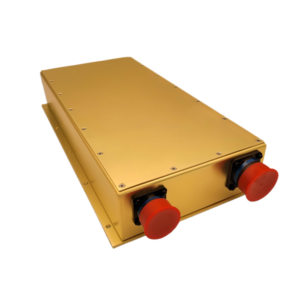
MILITARY GRADE PRODUCT – 2,000W Conduction Cooled AC/DC Power Supply

CH-M2000 Series- Military Grade Conduction Cooled AC/DC Power Supply

ETA-USA line of conduction cooled military grade AC/DC power supplies provide the single solution to power your military & defense application. Customers may use the standard input & output connector or request their own. Meets Mil-std 461G ground, airborne, and ship-board systems including Mil-std 1399 sec 300 for 50/60 Hz systems. Units can be built in as little as 5 weeks.

Click on Image for Datasheet

Features

  • Input: 95~264 VAC in, 50/60/400 Hz (47~440Hz) operation
  • Available voltages: 12, 24, 28, 48
  • In-rush current limited
  • 8″ x 14″ footprint (excluding connectors)
  • Aluminum Enclosure with chromate finish for corrosion resistance and low resistance bonding
  • Conformal coated internal circuitry
  • Mounting: Two rows of five, 0.20″ diameter thru holes for secure mounting and thermal conductivity
  • >20 msec Hold Up time at full load, 115VAC input, >50 msec at 220 VACin.
  • DC  Output Regulation: Less than 10 mV voltage drift from 0 to full load (measured at output terminal)
  • Ripple and Noise: <1% peak-to peak
  • Constant Current OCP Protection
  • Operating Altitude: 15,000ft & 40,000ft at 8 kPa (55,000 ft max)
  • Weight: 9.5 lbs (Standard Unit)

Mil-Standard Compliances (Without External Circuitry)

  • EMI: Mil-Std 461, CE101, CE102, RE102, RE103
  • Susceptibility: CS114, CS115
  • Input Transient Mil-Std 704
  • Surge protection: Mil-Std 1275
  • Power Factor: Mil-Std 1399 sec 300A
  • Meets Mil Std-1399 Sec 300A Power Profile for 115V 60Hz systems & CVN class 78
  • Environmental/Shock/Vibration: Mil-Std 810

Available Modifications

  • Hard Anodized Enclosure with EMI Grounding
  • Mil-Std 901 Shock Compliant Enclosure (Product Dimensions Subject to Change)
  • IP66 or IP67 Enclosure
  • Customized Input and Output Connector
  • External Voltage Trim (10%, 20%)
  • Remote On/Off
  • I2C Status Reporting (Output Voltage, Output Current, Internal Temperature)
  • Three Phase Wye or Delta Input (Contact ETA-USA Representative for Details)

Contact ETA-USA for Product Availability and CAD Files. 

See Our Full Line of Military and Aviation Power Supplies 

Government Customers- See Our Capability Statement


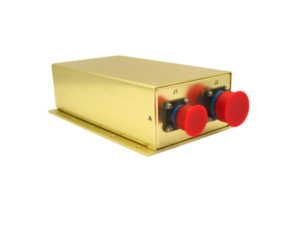
MILITARY GRADE PRODUCT – 500W Conduction Cooled AC/DC Power Supply

CH-M500 Series- Military Grade Conduction Cooled AC/DC Power Supply

ETA-USA line of conduction cooled military grade AC/DC power supplies provide the single solution to power you Mil-standard Application. Customers may use the standard input & output connector or request their own. Units can be built in as little as 5 weeks.

CH-M500 Mil-grade AC/DC
500W Military Grade Power supply. Click image for Datasheet 

Features

  • Input: 95~264 VAC in, 50/60/400 Hz (47~440Hz) operation.
  • In-rush current limited
  • Available voltages: 12, 24, 28, 48
  • Compact 5″x8″ footprint (excluding connectors)
  • Aluminum Enclosure with chromate finish for corrosion resistance and low resistance bonding
  • Conformal coated internal circuitry
  • Mounting: Two rows of five, 0.20″ diameter thru holes for secure mounting and thermal conductivity
  • >20 msec Hold Up time at full load, 115VAC input
  • DC  Output Regulation: Less than 10 mV voltage drift from 0 to full load (measured at output terminal)
  • Operating Altitude: 15,000ft & 40,000ft at 8 kPa (55,000 ft max)
  • Ripple and Noise: <1% peak-to peak


Mil-Standard Compliances (Without External Circuitry)

  • EMI: Mil-Std 461, CE101, CE102, RE102, RE103
  • Susceptibility: CS114, CS115
  • Input Transient Mil-Std 704
  • Surge protection: Mil-Std 1275
  • Power Factor: Mil-Std 1399 sec 300 for 50/60Hz systems
  • Environmental: Mil-Std 810

Available Modifications

  • Non-standard Voltages (Inquire with ETA-USA Representative)
  • Hard Anodized Enclosure with EMI Grounding
  • Mil-Std 901 Shock Compliant Enclosure (Product Dimensions Subject to Change)
  • External Voltage Trim (10%, 20%)
  • Sealed IP65/66/67 enclosure

Contact ETA-USA for Product Availability and CAD Files. 

See Our Full Line of Military and Aviation Power Supplies 

Government Customers- See Our Capability Statement